by The Open University
Available in 42 free installments
Owner:
Types of audiences vary enormously ? they could include customers for sales, an interview panel, relatives, work colleagues, peer groups, paying clients, tutorial groups, discussion groups.
The type of audience might well influence the format of your presentation and its content. A technical presentation to a specialist audience might be more formal than one to a discussion group, though this may depend on the size of the group: a small group technical presentation could easily be quite interactive. On the other hand, an after-dinner speech at a wedding might well be presented to a fairly large audience, but they may not be impressed if you show lots of Overhead Projection Transparencies (OHTs) and lecture to them on a serious topic!
Ask yourself the following questions for your intended audience:
Who are they?
What are their reasons for attending?
How many are likely to be present?
What sort of people ? age, education, status?
What do they already know about the subject?
What are their likely attitudes/biases?
The answers to these questions will affect both the style and the content of your talk. You also need to be prepared to adjust to unexpected circumstances, for instance, what happens if you have planned a session involving group work and only one person turns up?
Your audience's response may also be strongly influenced by the conditions at the venue for your talk, and we are going to explore this next.
The size of the audience might affect several aspects of your planning for the presentation. For example, a small group (say about 10?15) would only need a small room. The seating arrangement could be grouped around the presenter so you might prepare a more interactive approach to your presentation. There would be no need for a sound system to project your voice. You would be able to plan for more questions and answers in your session as people tend to be more willing to ask questions in a smaller room.
For a larger audience it may be harder to achieve informality, and interactive approaches may be less practical.
Look at the shapes of the seating plans in Figure 3 below, where each square represents a chair. Decide which seating plan would be most suited to each type of audience.
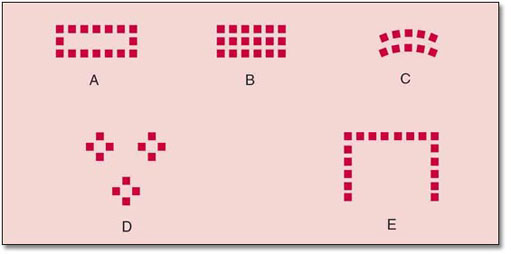 Figure 3: Various seating plansLong description