claims agreements or that might be so acquired,
versions of the whole written Constitution, from
and to guarantee all the rights equally to men
the Act of 1867 to the Act of 1982, which would
and women. The amendment also provided
make both versions equally authoritative.
that there would be no amendments to the
constitutional provisions relating to Indians
and Indian reserves, or the aboriginal rights
and freedoms guaranteed by the Canadian
Charter of Rights and Freedoms, without
discussions at a conference of fi rst ministers
with representatives of the native peoples. The
amendment came into force on June 21, 1984.
The Constitution Act, 1982, also contains
a section on equalization and regional
disparities. This proclaims: (1) that the
national government and Parliament and the
provincial governments and legislatures ?are
committed to promoting equal opportunities
for the well-being of Canadians, furthering
economic development to reduce disparities in
opportunities, and providing essential public
services of reasonable quality to all Canadians?;
and (2) that the government and Parliament
of Canada ?are committed to the principle of
making equalization payments to ensure that
provincial governments have suffi
cient revenues
to provide reasonably comparable levels of
public services at reasonably comparable levels
of taxation.?
The 1982 Act also provides that the guarantees
for the English and French languages do
not abrogate or derogate from any legal or
customary right or privilege enjoyed by any
other language, and that the Charter shall
be interpreted ?in a manner consistent with
A Federal State
19
How Canadians Govern Themselves
Powers of the
National and Provincial
Governments
The national Parliament has power ?to
institutions, licences for provincial and
make laws for the peace, order and good
municipal revenue purposes, local works
government of Canada,? except for ?subjects
and undertakings (with certain exceptions),
assigned exclusively to the legislatures of the
incorporation of provincial companies,
provinces.? The provincial legislatures have
solemnization of marriage, property and
power over direct taxation in the province for
civil rights in the province, the creation of
provincial purposes, natural resources, prisons
courts and the administration of justice, fi nes
(except penitentiaries), charitable institutions,
and penalties for breaking provincial laws,
hospitals (except marine hospitals), municipal
matters of a merely local or private nature in
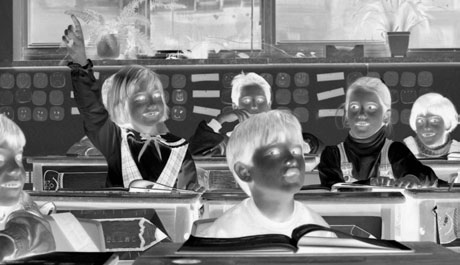
The provincial legislatures have the constitutional right of direct taxation for areas under provincial jurisdiction, such as education.
20
Powers of the National and Provincial Governments
the province, and education (subject to certain
By virtue of the Constitution Act, 1867,
rights of the Protestant and Roman Catholic
everything not mentioned as belonging to