

browsing the album, the French translation is "Je regarde des photographies." ("I am looking at some photographs.")
V: People
French Vocabulary ? Print version ?
audio (info ?679 kb ? help)
People Les personnes
la personne
person
pehr son
Gender and Age
l'homme (m)
man
ohm
la femme
woman
fehm
le garçon
boy
gehrsoh
la fille
girl
fee
la fillette
little girl
fee yet
Friends
l'ami (m)
ahmee
male friend
le copain
co pahn
l'amie (f)
ahmee
female friend
la copine
co peen
V: Expressions
Qu?est-ce que c?est?
To say What is it? or What is that? in French, Qu?est-ce que c?est? (pronounced kehss keuh say) is used.
Qu?est-ce que c?est ? - What is it?
Literally, Qu?est-ce que c?est? translates to What is it that it is? You will be using Qu'est-ce que...? often to say What...? at the beginning of sentences.
To respond to this question, you say C?est un(e) [ nom ]. , meaning It is a [ noun ].
C'est un livre. - It's a book.
C'est un chien. - It's a dog.
Remember that the indefinite article (un or une) must agree with the noun it modifies.
C'est une chemise. - It's a shirt.
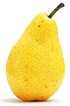
Check for understanding - Qu?est-ce que c?est?
Respond according to the pictures.
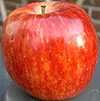


une pomme
une poire
un chaton (un chat)
un chien
Il y a and voici/ voilà
Il y a (pronounced eel ee ah) is used to say there is or there are. Il y a expresses the existence of the noun it introduces.
Il y a une pomme. - There is an apple.
The phrase is used for both singular and plural nouns. Unlike in English (is => are), il y a does not change form.
Il y a des pommes. - There are (some) apples.
The -s at the end of the most pluralised nouns tells you that the phrase is there are instead of there is. In spoken French, when both the singular and plural forms almost always sound the same, the article (and perhaps other adjectives modifying the noun) is used to distinguish between singular and plural versions.
