Food and Drink
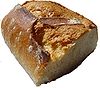 |
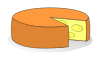 |
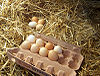 |
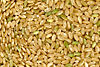 |
 |
| Pan (m) |
Queso (m) |
Huevo (m) |
Arroz (m) |
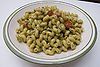
Pasta (f) |
 |
 |
 |
 |
 |
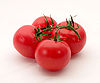
| Tomate (m) |
Lechuga (f) |
Pepino (m) |
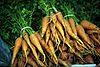
Zanahoria (f) |
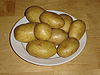
Patata (f) |
 |
 |
 |
 |
 |
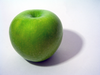
| Manzana (f) |
Plátano (m) |
Naranja (f) |
Pera (f) |
Uva (f) |
 |
 |
 |
 |
 |
| Agua (m) |
Leche (f) |
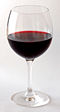
Vino (m) |
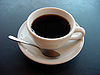
Café (m) |
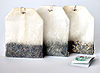
Té (m) |
- Notes
- m indicates that the noun is masculine (el queso ? "the cheese"; los plátanos ? "the bananas"), whereas f indicates that it is feminine (la lechuga ? "the lettuce"; las uvas ? "the grapes")
- In South America, papa is used instead of patata and Plátano refers to a plantain or cooking banana whereas a normal sweet banana is known as a banana or banano.
- While agua is feminine, it takes the masculine articles un and el. For example, el agua curiosa ("the strange water") and las aguas curiosas ("the strange waters"). This is because agua starts with an accented a.
- Con means "with", sin means without (café con leche means "coffee with milk", café sin leche means "coffee without milk").
- Wine comes in two varieties, "red" and "white". In Spanish, they are called vino tinto and vino blanco.
- Examples
- Me gustan los huevos.
- I like eggs.
- No me gusta nada la lechuga.
- I don't like lettuce at all.
- Me encanta el té con leche.
- I love tea with milk
- Me gustan mucho las zanahorias, pero los pepinos son aburridos.
- I like carrots a lot, but cucumbers are boring.
What do you eat?
To ask what someone else eats, use Qué followed by a form of one of the verbs below (¿Qué comes? means "What do you eat?"). To ask what someone likes to eat, use Qué te gusta then any of the verbs below (¿Qué te gusta comer? means "What do you like to eat?").
|
Spanish Verbs ? Print version
Eating and Drinking  Comer y Beber Comer y Beber
|
|---|
| Español |
Inglés |
|---|
| Comer |
To eat |
| Beber |
To drink |
| Tomar |
To have (food/drink) |
| Desayunar |
To (eat) breakfast |
| Almorzar [in Spain, comer] |
To (eat) lunch |
| Cenar |
To dine (eat dinner) |
- Note
All of these verbs are regular except almorzar, which is one of the UE Verbs we learnt about in the last chapter; almuerzo, almuerzas, almuerza, almorzamos, almorzáis, almuerzan.
- Examples
- ¿Qué te gusta almorzar?
- What do you like to eat for lunch?
- Como naranjas y plátanos, pero no me gustan las peras.
- I eat oranges and bananas, but I don't like pears.
- Me gusta comer uvas.
- I like to eat grapes.
- ¿Bebes leche?
- Do you drink milk?
A bottle of wine
|
Spanish Verbs ? Print version
Eating and Drinking Comer y Beber
|
|---|
| Español |
Inglés |
|---|
| Algo de |
Some |
| Un vaso de |
A glass of |
| Una copa de |
| Una botella de |
A bottle of |
| Una barra de |
A loaf of |
| Un kilo de |
A kilo of |
| Un kilo y medi? de |
One and a half kilos of |
| Un kilo y cuarto de |
One and a quarter kilos of |
| ?edio kilo de |
Half a kilo of |
| Un cuarto de kilo de |
A quarter of a kilo of |
- Notes
- You will have noticed "some" on the list, but "unos/unas" is some! Yes, it would be unas manzanas ("some apples") but that only works for plurals. "Some bread" has to be translated as algo de pan.
- Also, there are two ways of saying "a glass of". Copa is for glasses with a stem (mostly wine: una copa de vino), and vaso is used for without a stem.
- Obviously, in all these phrases, the un can be replaced with any number (Dos vasos de leche means "two glasses of milk").
- Examples
- Tres botellas de vino tinto
- Three bottles of red wine
- Un medio kilo de arroz
- Half a kilo of rice
- Una barra de pan
- A loaf of bread
- Cinco kilos y medio de patatas
- Five and a half kilos of potatoes
Go to the exercises.



