by Wikibooks, open books for an open world
Available in 123 free installments
Owner:
As with any system being designed, the filter response characteristics of an acoustic filter are tailored based on the frequency spectrum of the input signal and the desired output. The input signal may be infrasonic (frequencies below human hearing), sonic (frequencies within human hearing range), or ultrasonic (frequencies above human hearing range). In addition to the frequency content of the input signal, the density, and, thus, the characteristic impedance of the medium (media) being used in the acoustic filter must also be taken into account. In general, the characteristic impedance  for a particular medium is expressed as...


where
= (equilibrium) density of medium
= speed of sound in medium
The characteristic impedance is important because this value simultaneously gives an idea of how fast or slow particles will travel as well as how much mass is "weighting down" the particles in the medium (per unit area or volume) when they are excited by a sound source. The speed in which sound travels in the medium needs to be taken into consideration because this factor can ultimately affect the time response of the filter (i.e. the output of the filter may not radiate or attenuate sound fast or slow enough if not designed properly). The intensity  of a sound wave is expressed as...
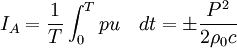
 .
.
is interpreted as the (time-averaged) rate of energy transmission of a sound wave through a unit area normal to the direction of propagation, and this parameter is also an important factor in acoustic filter design because the characteristic properties of the given medium can change relative to intensity of the sound wave traveling through it. In other words, the reaction of the particles (atoms or molecules) that make up the medium will respond differently when the intensity of the sound wave is very high or very small relative to the size of the control area (i.e. dimensions of the filter, in this case). Other properties such as the elasticity and mean propagation velocity (of a sound wave) can change in the acoustic medium as well, but focusing on frequency, impedance, and/or intensity in the design process usually takes care of these other parameters because most of them will inevitably be dependent on the aforementioned properties of the medium.


