by Various
Available in 585 free installments
Owner:
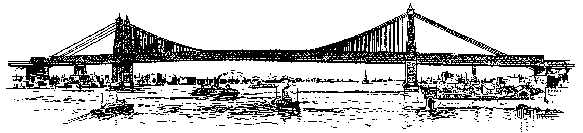 Fig. 12.?Williamsburg Suspension Bridge.
Of later bridges of great span, perhaps the bridges over the East river at New York are the most remarkable. The Brooklyn bridge, begun in 1872, has a centre span of 1595½ and side spans of 930 ft. The Brooklyn approach being 971 ft., and the New York approach 1562½ ft., the total length of the bridge is 5989 ft. There are four cables which carry a promenade, a roadway and an electric railway. The stiffening girders of the main span are 40 ft. deep and 67 ft. apart. The saddles for the chains are 329 ft. above high water. The cables are 15¾ in. in diameter. Each cable has 19 strands of 278 parallel steel wires, 7 B.W.G. Each wire is taken separately across the river and its length adjusted. Roebling preferred parallel wires as 10 % stronger than twisted wires. Each strand when made up and clamped was lowered to its position. The Williamsburg bridge (fig. 12), begun in 1897 and opened for traffic in 1903, has a span of 1600 ft., a versed sine of 176 ft., and a width of 118 ft. It has two decks, and carries two elevated railway tracks, four electric tramcar lines, two carriageways, two footways and two bicycle paths. There are four cables, one on each side of the two main trusses or stiffening girders. These girders are supported by the cables over the centre span but not in the side spans. Intermediate piers support the trusses in the side spans. The cables are 18¾ in. in diameter; each weighs about 1116 tons, and has a nominal breaking strength of 22,320 tons, the actual breaking strength being probably greater. The saddles are 332 ft. above the water. The four cables support a dead load of 7140 tons and a live load of 4017 tons. Each cable is composed of 37 strands of 208 wires, or 7696 parallel steel wires, No. 8 B.W.G., or about 3/16 in. in diameter. The wire was required to have a tensile strength of 89 tons per sq. in., and 2½% elongation in 5 ft. and 5% in 8 in. Cast steel clamps hold the cable together, and to these the suspending rods are attached. The cables are wrapped in cotton duck soaked in oxidized oil and varnish, and are sheathed in sheet iron. A later bridge, the Manhattan, is designed to carry four railway tracks and four tramway lines, with a wide roadway and footpaths, supported by cables 21¼ in. in diameter, each composed of 9472 galvanized steel wires 3/16 in. in diameter.
