by The Open University
Available in 42 free installments
Owner:
We assume that by now you have clarified the subject and purpose of your talk; you have identified the intended audience; and you have some idea of the situation at the venue. Now you need to focus on the material and the structure of your presentation.
This is the time to gather your thoughts and assemble material that may be useful. Keep in mind that you may be able to think about the talk even at odd moments ? when you are doing other jobs, for instance, or travelling to work. You may find it useful to carry a notebook to jot down ideas as they occur to you. Some of the best ideas occur when you are not actually working on the topic at hand. Sources for material could include books, journals, radio and TV programmes, the internet, discussions with colleagues and friends, and so on. You may want to consider exploring ideas and thoughts in this section as well by using various techniques.
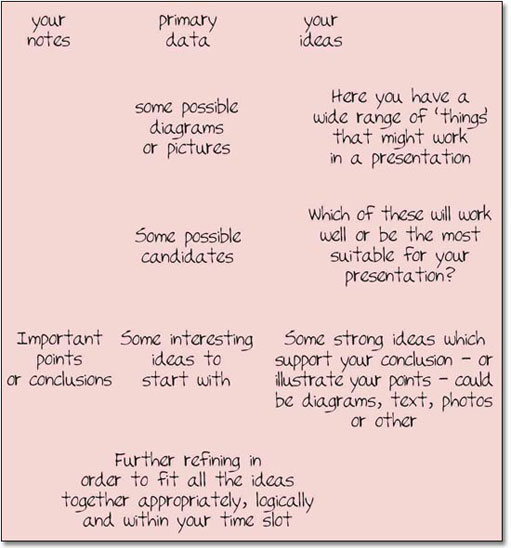 Figure 4: A possible activity map for constructing your content and structure in a presentationLong description
The key to organising your material is to have a definite structure. In this section we'll cover a series of exercises which illustrate the importance of having a beginning, middle and end to your talk. We won't go into depth just yet about the delivery of your presentation; we will look at the preparation you need to do to gather and organise all the information you'll be using.
The content of any presentation needs to have a clear structure. This will allow the audience to understand your main themes and leave the presentation feeling that it has been a worthwhile experience.
In Section 1, we suggested that most presentations work well by using ?a Rule of 3?. This is shown below in Figure 5.
