by The Open University
Available in 42 free installments
Owner:
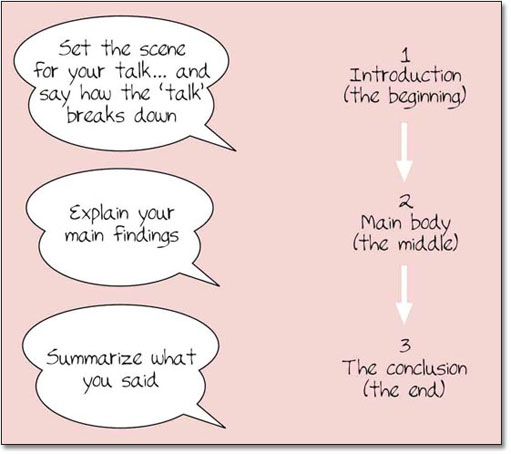 Figure 5: The three parts of a presentationLong description
It is crucial to be very clear exactly what you are going to say and do in the first few minutes. Your introduction needs to be well structured for several reasons:
You may, like most people, be at your most nervous during the first few minutes.
You may be the first or only speaker and have to ?break the ice?, and make the audience feel immediately that their attendance is worthwhile.
You may have to follow a speaker who, through the attractiveness or strength of personality or by reason of their subject, has achieved great acceptance by the audience.
You may have to follow some other activity which has been extremely successful; or the ?high-spot? of the occasion.
For any of these reasons, you have to create an immediate impression and gain the attention and interest of your audience. To achieve this you need to know exactly what you're going to say.
Think of a presentation you have attended. Write a list of the sorts of things the presenter put into the introduction. If you can't remember, or haven't ever attended one, think about how a book is laid out.
Many presenters use some interesting techniques to start their presentations. We discuss some useful opening strategies for effective presentations below. Not all of these will work in every situation, but by having some choices about how to start, we hope you will find a method which suits your specific presentation.
Statement of subject or title ? this may not seem very inspiring to the audience but it can be short, sharp and informative.
Statement of your objective and the plan of your talk ? a good, safe way to start if you have adopted a deductive sequence, but if you are trying to persuade you don't want to give the game away too early. Even where it is appropriate to include the objective and structure of your talk in the introduction, don't make this your opening remark ? try one of the more interesting ideas which follow.
Question ?anticipate the sort of questions your audience might want answered in connection with your subject: ?Are the days of a Great Britain finished for ever?? ?Must we sacrifice the essential quality of life if we are to take full advantage of the benefits that high technology can bestow?? The audience instinctively tries to arrive at an answer and you can go on to give yours.
