by The Open University
Available in 42 free installments
Owner:
| Form of notes | What they look like | When to use them |
|---|---|---|
| linear (most common form of notes) | written along the line, usually several pages for a big topic; lots of words but not whole sentences; use abbreviations and possibly arrows, underlining etc. | for recording a lot of information; possibly to support later essay writing or revision ? usually shortened or used as the basis for index cards during revision |
| flow chart | fewer words than linear notes; more visual; ideas or information in logical flow | to show flow or direction in a process; often associated with science or economics but can be used for any topic; can illustrate connections between ideas |
| tabular | in table form ? like this | to help categorise or analyse; to sort ideas or information in a way that is easier to handle and remember |
| spider or spray diagram | key words and phrases arranged in a branching structure | to show connections between ideas, events, theories, etc.; as a working tool while reading, note-taking, assignment planning, and revision |
| diagrams and other visual presentations | formulae, drawings, pictures, or sets of images with few words | use like a mind-map (to provide justification as some people may think a diagram is not really a form of notes) |
Match the number representing the ?Five sorts of notes? shown in Figure 6 to the description and use of the notes in Table 2.
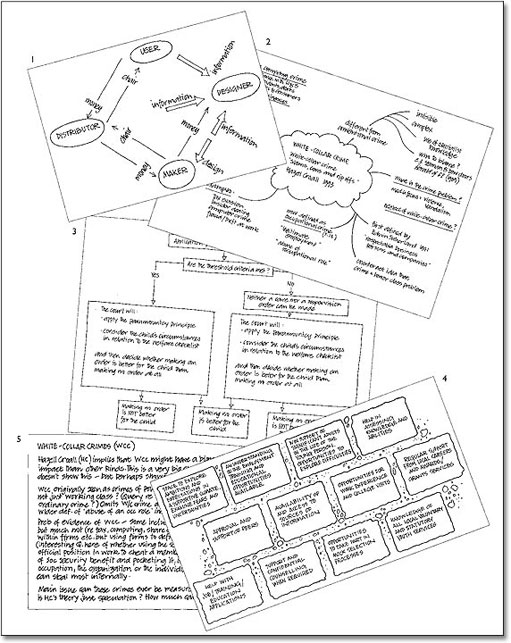 Figure 6: Five sorts of notesLong description
You may have matched the items up like this:
1 = visual representation
2 = mind map
3 = flow chart
